News
Offshore Wind Development BC-WA Coast Advances
Insightful and neutral, data-driven analysis of Offshore wind development along the BC-WA coast, exploring technology and market implications.
By Nina Kowalski · July 21, 2026 · 14 min read
 By Nina Kowalski · July 21, 2026 · 14 min read
The latest developments around Offshore wind development BC-WA coast reflect a pivotal moment for the U.S. Pacific Northwest and British Columbia’s renewable energy strategy. regulators in British Columbia are moving to streamline wind project permitting under a unified regulator, while policymakers and planners on the Washington coast are actively weighing the economics, infrastructure needs, and siting implications of offshore wind as a potential future resource. The convergence of regulatory shifts in Canada and technical and economic assessments on the U.S. West Coast underscores a broader push to diversify energy portfolios, improve grid resilience, and create pathways for coast-wide energy collaboration. This coverage provides a data-driven look at what happened, why it matters, and what readers should watch for next as Offshore wind development BC-WA coast gains more attention from policymakers, industry players, and coastal communities.
Ongoing regulatory modernization in British Columbia sets the stage for a more predictable permitting regime for wind projects, including offshore components, as part of a broader push to accelerate renewables under the province’s energy regime. At the same time, Washington’s coastal energy planning process has placed offshore wind on the agenda as a possible contributor to regional reliability, with clear cost and infrastructure considerations shaping near-term decisions. The net effect for readers is a closer look at how cross-border dynamics, regulatory frameworks, and technology readiness intersect on the coast from British Columbia to Washington State. For BC residents, businesses, and First Nations communities, these changes could influence project timing, land-use processes, and the availability of new clean-energy capacity. For Washington residents and coastal industries, the focus is on siting, transmission pathways, potential environmental impacts, and the timeline to reach any future offshore wind milestones.
Opening era questions about how offshore wind will fit into the energy mix are being answered, in part, by concrete regulatory steps in British Columbia and by candid, data-backed assessments on the Washington coast. The discussion is not just about turbines turning offshore; it’s about a coordinated regulatory approach, cost structures, supply chains, and community engagement that will determine whether offshore wind becomes a practical, scalable option for the West Coast. As readers, you will want to follow both jurisdictions’ public communications, regulatory updates, and independent evaluations that shed light on whether offshore wind can be integrated in a manner that preserves coastal ecosystems, supports local economies, and strengthens energy security.
What Happened
British Columbia’s regulatory leap for renewable energy projects
In early 2025, British Columbia announced a significant shift designed to accelerate renewable energy projects by placing renewables permitting under the BC Energy Regulator (BCER). The move is part of a broader suite of reforms intended to streamline review processes and enable faster project progression for wind and solar developments, while maintaining robust environmental and public-interest protections. The regulatory evolution culminated in a formal update: the Renewable Energy Projects Regulation took effect March 10, 2026, establishing a single-window permitting framework for high-output wind and solar projects defined as greater than 5 MW nameplate capacity. The regulation lays out lifecycle requirements across permitting, construction, operation, environmental protection, safety, and restoration, ensuring projects proceed with appropriate First Nations consultation and public engagement. Existing renewable energy projects must comply with the new framework by October 1, 2026. These changes were part of a broader set of legislative and regulatory enhancements designed to support BC’s renewable energy ambitions and grid modernization. (bc-er.ca)
BC Hydro’s ongoing efforts to secure new capacity via competitive solicitations provide context for the province’s wind development trajectory. In 2025, BC Hydro reported a robust response to its capacity RFEOI (Request for Expressions of Interest), signaling substantial interest from developers in adding new clean capacity to the province’s grid. The RFEOI results underscored the market’s appetite for wind and other renewables as part of BC’s broader energy transition, reinforcing that the regulatory framework now in place could help de-risk and accelerate project realization, including potential offshore components as the province’s wind potential is assessed and developed. While these capacity announcements focus on a broader mix of renewables, they are an important signal of the market’s readiness to scale wind generation within British Columbia’s borders. (bchydro.com)
Washington coast energy planning: offshore wind discussed by regulators and analysts
On the U.S. side of the coast, Washington State’s energy planning ecosystem has begun to thread offshore wind into its broader resource planning, with a particular emphasis on costs, transmission, and siting. A March 2026 Washington Coastal Marine Advisory Council (WCMAC) meeting summary highlights that offshore wind potential off the Washington coast is recognized as a resource with strong regional potential, especially given the state’s winter demand profile. The meeting noted that offshore wind sits within a broader energy portfolio discussion that includes hydropower-dominated energy supply, transmission constraints, and grid readiness. Importantly, the document emphasizes that offshore wind, at least in the near term, is not currently cost-competitive with other generation options, and any future deployment would hinge on cost reductions, supply chain development, and economies of scale. Washington regulators and officials prioritized marine spatial planning and mitigation strategies to address potential impacts on coastal industries, fisheries, and ecosystems should offshore wind move forward. This reflects a cautious, data-driven approach that weighs economic feasibility against environmental and social considerations. (ezview.wa.gov)
Timeline: key dates and milestones shaping offshore wind on the West Coast
- March 18, 2026: Washington’s WCMAC convened to discuss offshore wind considerations, energy system dynamics, and the siting tradeoffs that would accompany any future offshore wind development along the Washington coast. The meeting highlighted the cost and grid constraints that make offshore wind a long-term, rather than short-term, option for the state. (ezview.wa.gov)
- March 2026: The Washington energy discussion emphasized that offshore wind potential exists on the Washington coast, with analyses indicating seasonal alignment with winter demand but signaling that capacity development would require significant grid investments and policy support to become viable. The council’s energy sector update underlined the need to balance coastal economic interests, environmental protections, and energy planning goals when weighing offshore wind as a future resource. (ezview.wa.gov)
- February 2025–March 2026: British Columbia advanced regulatory reforms to streamline renewables permitting, culminating in the Renewable Energy Projects Regulation’s introduction and effective date, allowing BCER to oversee wind and solar project approvals across the project lifecycle. The integrated regulatory framework includes provisions for First Nations rights, public consultation, and environmental and safety standards, with compliance timelines set to ensure a smooth transition for existing and upcoming projects. (news.gov.bc.ca)
What these steps indicate about cross-border coordination
The juxtaposition of BC’s regulatory modernization and Washington’s coastal planning discussions signals a broader cross-border interest in the Pacific Northwest’s offshore wind potential. While BC is moving toward a streamlined permitting regime for renewables under the BCER, Washington is approaching offshore wind with deliberate analysis of costs, grid readiness, and siting constraints. Taken together, these developments create a framework where cross-border dialogue—on transmission interties, environmental standards, and workforce development—could help synchronize efforts if offshore wind moves toward deployment on either side of the coast. Regulatory alignment could reduce duplication of studies and expedite permitting, while shared learnings about turbine technology, subsea transmission, and interconnection strategies could benefit both jurisdictions. (bc-er.ca)
Why It Matters
Economic and reliability implications for the coast
Offshore wind development BC-WA coast has the potential to augment regional energy portfolios, diversify generation sources, and bolster reliability in a grid that increasingly relies on variable renewables. In British Columbia, the regulatory shift to a single regulator for renewables promises a more predictable permitting process, which could shorten project lead times and improve cost certainty for wind developers and investors. By enabling faster access to regulated transmission infrastructure—under the North Coast Transmission Line and other high-voltage lines—the BCER framework aims to improve grid flexibility and expand opportunities for wind to contribute to the province’s clean-energy goals. The legislative and regulatory updates reflect a policy environment designed to attract investment while ensuring environmental and Indigenous rights considerations are front and center. The net effect for developers is a clearer path to permitting and a more stable regulatory baseline as BC explores larger-scale wind potential, possibly including offshore components, in the future. (bc-er.ca)
Meanwhile, on the Washington coast, offshore wind faces a more incremental path, underpinned by cost considerations and grid constraints. The WCMAC framing notes that offshore wind could align with winter demand patterns, but the technology’s current cost profile and the need for substantial transmission upgrades imply that any deployment would be years away, with a heavy emphasis on cost reductions and supply chain maturation. The Washington energy dialogue thus prioritizes a measured approach—one that weighs the potential benefits of offshore wind against the realities of capital intensity, environmental stewardship, and community impacts. For coastal communities, this means ongoing engagement opportunities, clear timing signals (or the absence of them), and an emphasis on ensuring local industries and ecosystems are protected as planning advances. The result is a more robust public conversation about how offshore wind could fit into a balanced coastal energy strategy if and when the economics and siting conditions become favorable. (ezview.wa.gov)
Who stands to gain or lose, and what others are watching
- First Nations and Indigenous communities in British Columbia: The BCER regulatory approach foregrounds Indigenous rights and involvement as a core element of renewables permitting. In practice, this means potential wind projects must engage with Indigenous communities early and meaningfully, with regulatory pathways designed to acknowledge treaty rights and collaborative governance. The regulatory framework explicitly centers consultation and rights protections as part of project lifecycle requirements. For communities and nations, these rules provide greater clarity on participation opportunities and the alignment of energy development with local priorities. (bc-er.ca)
- Coastal industries and fisheries in Washington: The WA offshore wind discourse reflects a precautionary approach to siting, with attention to ecological and economic interactions along the coast. The Washington coastal region supports a diverse economy, including fisheries, tourism, and maritime industries. As offshore wind moves from concept to planning, stakeholders will listen for progress on siting criteria, wildlife protections, and mitigation strategies, ensuring that coastal livelihoods are not displaced or disproportionately affected by new infrastructure. The WA council discussions underscore the importance of mitigation planning and stakeholder engagement in shaping any potential future offshore wind program. (ezview.wa.gov)
- Utilities and developers: In British Columbia, the combined effect of legislative modernization and regulatory clarity lowers one of the major non-technical barriers to renewables investment: permitting risk. The BC Hydro RFEOI results show a market appetite for new capacity, including wind, signaling that developers are ready to scale if policy and regulatory conditions support timely project delivery. This alignment of market signals with regulatory readiness can encourage investment in wind projects, including potential offshore elements if viability and regulatory conditions converge. (news.gov.bc.ca)
- The broader Pacific Northwest energy market: Even though offshore wind on the U.S. West Coast remains in a planning and analysis phase, the West Coast’s energy strategy increasingly considers offshore wind as part of a diversified, resilient energy mix. Washington’s discussions about offshore wind potential, together with BC’s regulatory reforms, contribute to a shared regional narrative about how offshore wind could complement existing hydropower, transmission investments, and other renewables. This nexus is of interest to policymakers, industry analysts, and the public who seek to understand how regional energy security and environmental stewardship can be balanced. (ezview.wa.gov)
Strategic context: how offshore wind could fit with West Coast decarbonization goals
The West Coast has long pursued decarbonization goals, and offshore wind is one of several technologies under consideration to meet those goals. In British Columbia, the regulatory framework’s emphasis on streamlined permitting can accelerate renewables integration if future offshore components move from concept to delivery. In Washington, the emphasis remains on cost curves, grid modernization, and coastal ecosystem protection, with offshore wind as a potential future option once the economics align with policy and public-safety considerations. The balancing act across both jurisdictions—emphasizing reliability, affordability, and environmental stewardship—provides a blueprint for how offshore wind might be evaluated in other coastal regions if the West Coast’s experience proves scalable and adaptable. The evolving policy and planning landscape thus serves not only the local jurisdictions but also national and international observers seeking to understand best practices in siting, permitting, environmental safeguards, and cross-border cooperation. (ezview.wa.gov)
What’s Next
Short-term milestones and regulatory transitions
- British Columbia: The Renewable Energy Projects Regulation became effective March 10, 2026, and existing projects must comply by October 1, 2026. The BCER is positioned as the single regulator for renewables, giving project proponents a more streamlined and predictable pathway from application to operation, with explicit requirements around First Nations rights, environmental protection, and safe operations. Expect continued guidance materials and stakeholder outreach as guidance documents roll out to support understanding of the new requirements, with industry readiness activities and regulator-aligned timelines underpinning practical steps for developers. In the next phase, the focus will be on applying the new rules to upcoming wind projects and ensuring alignment with transmission planning for high-voltage connections as part of BC’s broader grid modernization agenda. (bc-er.ca)
- Washington: The March 2026 WCMAC meeting underscored that offshore wind is currently not cost-competitive and would require cost reductions, supply-chain maturation, and grid upgrades to become viable. The council emphasized ongoing needs for marine spatial planning and mitigation strategies, suggesting that near-term offshore wind activity on the Washington coast remains contingent on future economic and technical breakthroughs, as well as policy commitments to enable large-scale investment. Stakeholders should monitor any further regulator- or legislature-driven signals about siting criteria, environmental safeguards, and potential funding mechanisms for grid and transmission enhancements that could unlock offshore wind in the longer term. (ezview.wa.gov)
Longer-term scenarios and watch-outs
- Cross-border collaboration: If offshore wind moves toward realization in British Columbia or on the Washington coast, there is potential for cross-border coordination on transmission interties, shared environmental standards, and workforce development. The proximity of the two jurisdictions means that, eventually, joint planning and information sharing could help optimize siting decisions, reduce duplication of environmental studies, and align community engagement frameworks. Policymakers and industry participants should watch for any formal cross-border collaboration initiatives, regulatory harmonization efforts, or joint feasibility studies that could accelerate deployment timelines and reduce overall costs. (bc-er.ca)
- Transmission and grid readiness: Across both jurisdictions, the success of offshore wind will hinge on robust transmission capacity and grid integration strategies. British Columbia’s emphasis on regulatory certainty will help, but the actual deployment of offshore wind would require substantial interconnection planning, submarine cables, and regional grid upgrades. Washington’s coastal planning similarly highlights the need for extended transmission networks to accommodate offshore wind generation, particularly if winter demand peaks are to be matched with wind output. Publicly available planning documents and regulator updates will be critical to understanding the timing and scope of such infrastructure investments. (ezview.wa.gov)
What to watch for in the near term
- Regulatory guidance and compliance timetables in BC: As BCER’s regulatory framework rolls out, project developers will be watching for guidance materials, application manuals, and interim interpretations that clarify expectations for permit timing, environmental baselines, and public engagement processes. The March 10, 2026 effective date marks a turning point, but the practical details for specific wind projects—especially those that could involve offshore components in the future—will unfold through regulator communications and stakeholder consultations. (bc-er.ca)
- Washington coastal stakeholder forums and updates: The WA Coastal Marine Advisory Council’s ongoing work, including updates on offshore wind considerations, will provide a barometer for the timing and scope of any potential offshore wind initiatives. In the near term, readers should expect continuing discussions about cost trajectories, grid upgrades, and siting frameworks as regulators, industry, and communities weigh trade-offs. The March 2026 meeting summary offers a baseline for what to expect in future meetings and documents. (ezview.wa.gov)
Closing
The West Coast’s offshore wind narrative is still taking shape, but the current trajectory is clearly shaped by two parallel tracks: British Columbia’s move to modernize and streamline renewable energy permitting under a single regulator, and Washington’s cautious but forward-looking exploration of offshore wind potential anchored in technical and economic realities. The Offshore wind development BC-WA coast story is not about immediate turbine installations; it is about setting the governance, economic, and technical foundations that could enable offshore wind when timelines align with cost curves, grid readiness, and environmental stewardship.
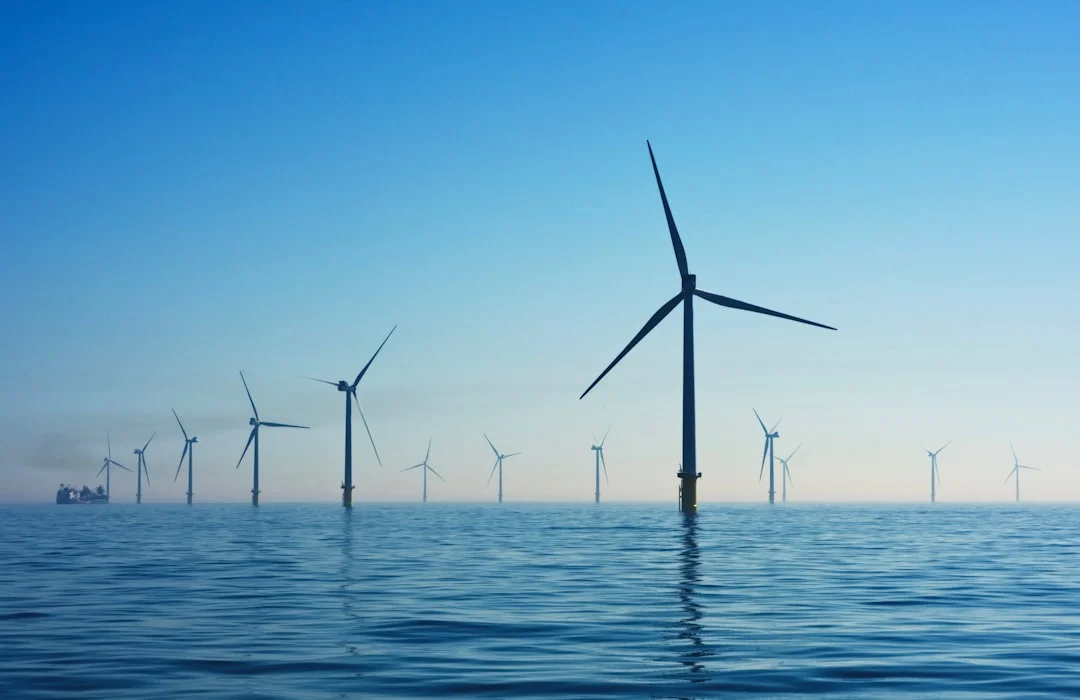
Photo by Nicholas Doherty on Unsplash
For readers who want to stay informed, monitor BCER’s regulatory updates and BC Hydro’s capacity announcements for signals about wind project momentum in British Columbia, and track Washington’s WCMAC meeting materials and regulator statements for progress on offshore wind siting, grid interconnections, and coastal impact assessments. The coast remains a dynamic frontier for energy innovation, and the evolving policy landscape will continue to shape how Offshore wind development BC-WA coast is framed, valued, and potentially realized in the years ahead.
"Offshore wind remains expensive relative to other generation options today, but cost reductions through scale and supply chain improvements could shift that balance in the future." — Washington Coastal Marine Advisory Council energy sector discussion, March 2026. (ezview.wa.gov)
As public interest and industry activity evolve, BC’s regulatory overhaul and Washington’s coastal planning conversations will likely converge in the coming years, helping to define whether offshore wind becomes a practical, long-term component of the Pacific Northwest energy mix. Readers should expect regular updates from provincial regulators, state agencies, and independent analyses to illuminate any shifts in feasibility, investment, or policy that could move offshore wind from the planning phase toward deployment on the BC-WA coast.
The BC and WA coast story is ongoing, and the next chapters will hinge on how regulators, industry, and coastal communities navigate the trade-offs between cost, reliability, and environmental stewardship—while keeping a vigilant eye on the potential for cross-border collaboration that could unlock shared energy opportunities on the Pacific Northwest’s western edge.