News
Port of Vancouver ELECTRA Truck Pilot
Discover a data-driven update on the Port of Vancouver ELECTRA truck pilot project and its significant implications for decarbonizing container drayage.
By Craig Burrows · August 28, 2026 · 11 min read
 By Craig Burrows · August 28, 2026 · 11 min read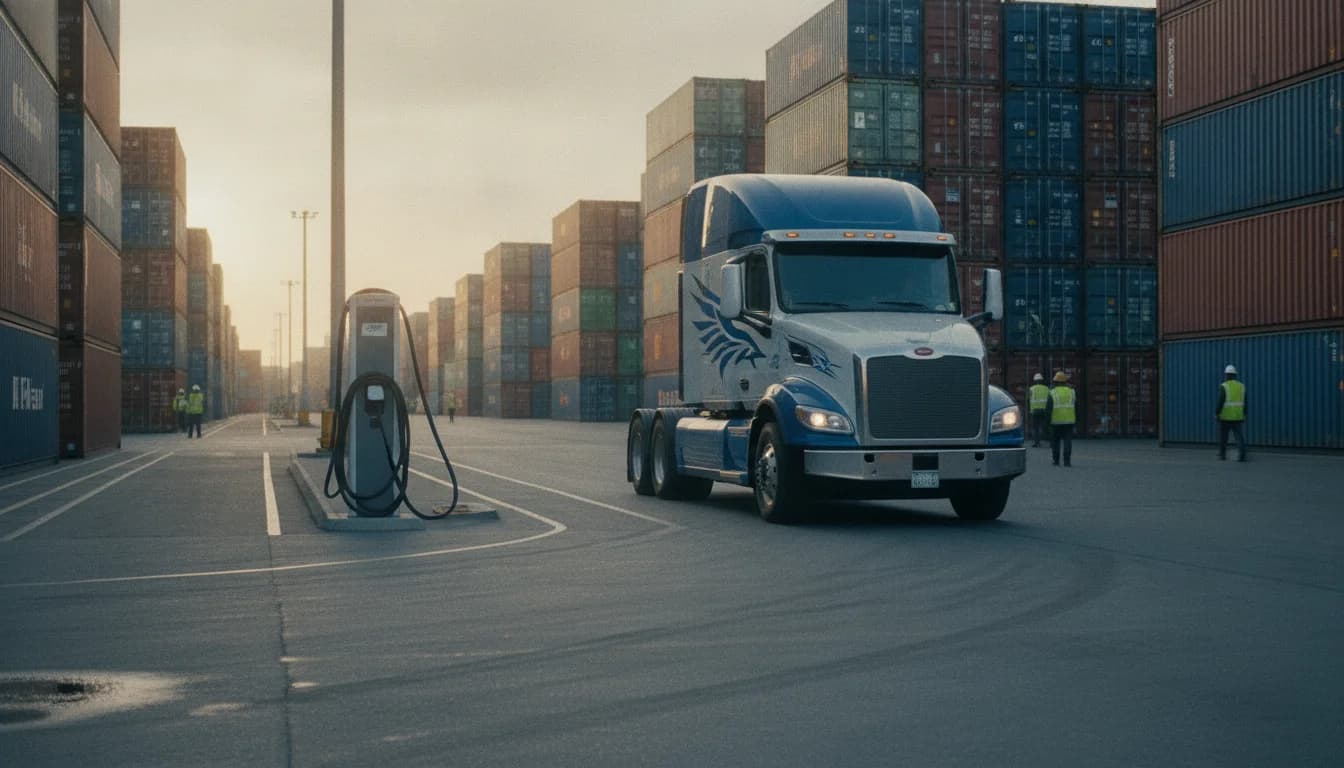
Port of Vancouver ELECTRA truck pilot signals a turning point for decarbonizing container drayage at Canada’s busiest port. The program brings battery-electric Class 8 trucks into real port service under a coordinated, government-supported funding package, with partners spanning government, utility and industry players. At stake is not only cleaner air near port corridors but also a data-rich test bed that could shape how fleets, regulators, and lenders approach heavy-duty electrification in North America. The announcement arrives as stakeholders across British Columbia and Canada push to demonstrate practical pathways from pilot to platform-scale adoption, balancing reliability, cost, and environmental performance for an essential segment of the supply chain. Port of Vancouver ELECTRA truck pilot began June 24, 2026, putting six battery-electric Class 8 trucks into service across five BC trucking companies, according to a Vancouver Fraser Port Authority announcement. (notices.pmkintl.com)
In its first phase, ELECTRA tests a explicit, tangible transition from diesel to electric drayage for container movements from port terminals to inland depots and distribution points. The program is part of the broader Low Emission Technology Initiative and is funded by a collaboration among Transport Canada, the Province of British Columbia, the Vancouver Fraser Port Authority, and BC Hydro. The project aims to provide participating fleets with not just capital equipment but also the infrastructure, training, and data access needed to understand the real-world economics of electrified port trucking. The initial rollout covers six BEV trucks across five trucking companies, with four trucks already in service and two more expected to hit the road later in 2026. The effort is designed to generate a robust data set for industry partners and policymakers to evaluate performance, reliability, and return on investment in a port context. (trucknews.com)
What Happened
Announcement and Participants
The ELECTRA program is a battery-electric container trucking pilot at the Port of Vancouver, with six Class 8 BEV trucks deployed across five participating BC carriers. The carriers named in public industry coverage include Aheer Transportation Ltd., Lally Bros. Holding Ltd., Simard Westlink Inc., TransBC Freight Ltd., and West Coast Freight Ltd. Deployment oversight and integration services are provided by 7Gen, the fleet electrification specialist coordinating the project’s rollout and ongoing support. This configuration reflects a collaborative model that aligns technology providers, fleet operators, and port authorities in a shared testbed for electrification. (trucknews.com)
The program is part of the Low Emission Technology Initiative, a joint funding partnership involving the Vancouver Fraser Port Authority and the Province of British Columbia, with a total funding package that includes support from Transport Canada and BC Hydro’s EV Fleet Program. The combined support is reported at approximately CA$3 million, enabling subsidized five-year leases on BEV trucks, charging infrastructure, maintenance, driver training, and data access. This multi-stakeholder funding structure is designed to reduce the upfront cost barriers for fleets and accelerate practical adoption in a high-usage port drayage segment. (trucknews.com)
7Gen is the deployment and fleet electrification partner responsible for delivering the trucks, charging infrastructure, and ongoing maintenance and operational support. The involvement of 7Gen underscores the importance of not only providing hardware but also the engineering, training, and data-management capabilities required to run a complex port operation with electric equipment. (trucknews.com)
Timeline and Key Facts
May 26, 2026: Industry coverage anchors the ELECTRA program’s public emergence, noting that the pilot aims to test zero-emission drayage equipment in real-world port operations and to capture performance data for the first 12 months of operation. This early reporting provides a baseline for the subsequent formal rollout and supplier commitments. (trucknews.com)
June 24, 2026: Port of Vancouver officially launches the battery-electric container trucking pilot program under ELECTRA, with six BEV Class 8 trucks deployed across five BC carriers. The program is designed to demonstrate operational viability and to collect performance data to inform broader adoption. Four trucks are in active service at launch, with two more expected to begin operation later in 2026. (notices.pmkintl.com)
12-month data window: The program commits to recording and sharing a comprehensive data set on truck performance, charging, utilization, and operational efficiency for the first year of operation. The intention is to publish insights that industry, regulators, and lenders can use to evaluate the business case for wider electrification in port drayage. (trucknews.com)
Financial and policy context: The ELECTRA initiative sits within a broader funding framework supported by Transport Canada, the Province of British Columbia, the Vancouver Fraser Port Authority, and BC Hydro, with additional backing for fleet electrification infrastructure. The program’s funding envelope and partner roster illustrate a coordinated, government- and industry-backed approach to accelerating decarbonization at the port level. (trucknews.com)
Equipment, Operations, and Data Management
Vehicle and equipment: The pilot is designed around six battery-electric Class 8 trucks capable of handling container drayage requirements. These BEV trucks are supported by on-site charging infrastructure designed to support the daily operations of port drayage, with maintenance and training packages included in the program. (trucknews.com)
Operations and maintenance: 7Gen leads the deployment and continues to provide maintenance and operational support, ensuring that the BEV fleet can operate with reliability in the demanding port environment. The arrangement emphasizes a turnkey approach to electrification, reducing the management burden on individual fleets and accelerating the learning curve for port operators. (trucknews.com)
Data platform and transparency: A centralized software platform will centralize vehicle, charger, and utility data, enabling operators, port authorities, and policymakers to analyze utilization, charging profiles, and performance metrics in a unified view. The data-sharing objective is to build a knowledge base that informs broader adoption decisions across the industry. (electricautonomy.ca)
Early operator feedback: Industry observers emphasize that the drayage segment—characterized by defined routes, daily miles, and predictable schedules—has promising economics for electrification, with the ELECTRA pilot serving as a concrete test case for BEV viability in port logistics. (electrek.co)
Data, Transparency, and Public Reporting
The ELECTRA program prioritizes transparency by sharing operational data publicly with industry partners and government agencies for the first year of operation. This approach aligns with broader public-interest objectives to accelerate adoption of lower-emission technologies in heavy-duty trucking and to inform policy and financing choices that can enable scale. (electricautonomy.ca)
Independent observers note that the ELECTRA initiative could serve as a blueprint for similar port electrification efforts in other regions, demonstrating how public funding, utility support, and fleet electrification can align around concrete operational targets, standardized data capturing, and shared learnings. (porttechnology.org)
Why It Matters
Environmental and Health Implications
The ELECTRA project sits at the intersection of port logistics and emissions reduction, addressing a key bottleneck in decarbonizing heavy-duty freight. By testing BEV trucks in real port drayage operations, the program contributes to the broader goal of reducing diesel emissions in a high-traffic port corridor and demonstrating the practicality of zero-emission alternatives for a core supply chain function. While port electrification literature highlights substantial life-cycle emissions reductions relative to diesel, the ELECTRA pilot provides the concrete, Canada-specific context needed to translate that potential into real-world decision-making for fleets and regulators. (portvancouver.com)
Industry commentary underscores that the drayage and short-haul Class 8 segment is where electrification has moved from theoretical feasibility to practical deployment, particularly when supported by stable lease models, charging infrastructure, and robust data feedback loops. The ELECTRA framework, including subsidized six-truck deployment and a year-long data collection program, encapsulates this transition. (electrek.co)
Economic and Market Context
The ELECTRA pilot reflects a broader market shift toward electrified heavy-duty trucking in port settings, where predictable routes and night-time operations facilitate efficient charging and high utilization. Industry analysis notes that such tests help establish the business case for fleets to adopt BEV technology, providing a path from pilot to scale that is backed by public and private funding. (electrek.co)
The funding structure—CA$3 million in combined support and ongoing access to charging infrastructure and data—offers a replicable model for other jurisdictions exploring BEV uptake in drayage and related port operations. Observers highlight that the availability of leases, maintenance, and data dashboards reduces the upfront risk for fleets entering electrification programs. (trucknews.com)
Policy and Leadership Implications
ELECTRA’s alignment with the Low Emission Technology Initiative demonstrates how provincial, federal, and port authorities can co-fund pilot programs that de-risk the shift to electrified port equipment. This model is notable for its multi-stakeholder approach, spanning government agencies, energy utilities, equipment suppliers, and fleet operators, and for its emphasis on data-driven lessons that can inform policy and financing frameworks at scale. (electricautonomy.ca)
The program’s transparency and data-sharing commitments are positioned to influence future policy discussions around port electrification, fleet financing, and grid readiness. By providing real-world results on charging needs, uptime, and lifecycle costs, ELECTRA helps policymakers calibrate incentives and infrastructure investments to accelerate adoption across the industry. (porttechnology.org)
Industry and Community Impacts
For trucking companies, ELECTRA offers a structured pathway to reduce fuel costs and emissions while maintaining service reliability. The program’s five-year lease model and on-site charging infrastructure are designed to lower barriers to entry for fleets that might otherwise hesitate to invest in BEV technology. Community stakeholders near port corridors also benefit from potential reductions in diesel exhaust and related air-quality concerns due to electrified drayage operations. (trucknews.com)
In the broader market, ELECTRA’s success or failure will influence investment decisions by fleet operators, financial institutions, and technology providers. As the dataset from the first year becomes available, lenders and insurers may adjust risk premiums, and manufacturers may accelerate BEV product development tailored to port environments. The pilot, therefore, has implications beyond the Port of Vancouver, setting a reference point for similar efforts in other ports and metropolitan regions. (porttechnology.org)
What This Means for Readers
For policymakers, industry observers, and business leaders, ELECTRA provides a concrete test of the operational and financial viability of battery-electric drayage at a major port. The program’s design — subsidized leases, charging infrastructure, training, and centralized data — is a template that could be adapted for other jurisdictions seeking to decarbonize heavy-duty trucking in port and industrial settings. (trucknews.com)
For BC readers of BC Times, ELECTRA offers insight into how public-private collaboration can drive rapid innovation in the logistics sector while still maintaining rigorous data collection and transparency. The pilot’s emphasis on measurable outcomes aligns with the outlet’s data-driven, neutral approach to technology and market trends. (electricautonomy.ca)
What’s Next
Short-Term Next Steps
Data-driven evaluation of the first year: The ELECTRA project will continue collecting operational data on uptime, charging cycles, maintenance needs, driver training effectiveness, and route performance. Industry observers will be watching for findings on energy consumption, battery degradation, and cost-of-operation compared with conventional drayage. This data will be shared with industry and government partners to inform broader adoption, which can influence policy incentives and financing models. (trucknews.com)
Additional BEV deployments: With four BEV trucks already in service at launch and two more planned later in 2026, the program is expanding to include more vehicles and potentially more carriers if the data demonstrate strong operational results and favorable economics. The expansion trajectory is typical for port electrification pilots that aim to demonstrate reliability before broaderscale adoption. (trucknews.com)
Infrastructure and grid readiness: As BEV deployments grow, charging infrastructure and grid capacity considerations will come into sharper focus. The ELECTRA model includes on-site charging facilities and utility partnership components, which are essential to maintaining high utilization and minimizing downtime for charging. Observers will assess how these components scale in tandem with fleet expansions. (trucknews.com)
Medium-Term Milestones
Expansion to additional fleets and routes: The initial success (or challenges) encountered by the five participating carriers could inform future expansions to other drayage operators servicing the Port of Vancouver and surrounding industrial zones. As the first year data are analyzed, policymakers and port operators may consider inviting further fleets to participate, with updated lease terms or tiered incentive structures aligned to performance metrics. (porttechnology.org)
Benchmarking and knowledge-sharing: The central data platform will enable benchmarking against other BEV deployments in North America, allowing stakeholders to compare cost, reliability, energy efficiency, and emissions outcomes across comparable port environments. The publication of results can accelerate learning across the industry and support lenders in underwriting electrification projects with more robust data. (porttechnology.org)
Long-Term Outlook
Path to scale: If the ELECTRA pilots meet performance and cost targets, port authorities and fleets could accelerate the transition to electrified port drayage on a regional or national scale. The data-informed approach, backed by government and utility funding, provides a model for how to mitigate risk, align incentives, and demonstrate real-world benefits to stakeholders across supply chains. The ABBLE of lessons learned and the resulting policy refinements could serve as a blueprint for other ports seeking to decarbonize trucking activities that operate at scale. (porttechnology.org)
Impact on the broader market: A successful ELECTRA pilot would likely influence adjacent segments, such as long-haul trucking and urban freight, by showcasing the viability of battery-electric solutions in heavy-duty operations with controlled duty cycles and predictable routes. It could help shape financing products, insurance models, and driver training programs tailored to BEV fleets, particularly in environments with high cadence operations like ports. (electrek.co)
Closing
The Port of Vancouver ELECTRA truck pilot marks a meaningful step toward tangible decarbonization in one of Canada’s most important freight corridors. By combining subsidized Leases, targeted charging infrastructure, hands-on operator support, and a robust data-sharing framework, ELECTRA tests whether battery-electric containers trucks can credibly replace diesel-powered drayage in a high-demand port setting. The program’s outcomes—measured in uptime, emissions, and total cost of operation—will help determine whether port operators, fleets, and policymakers should scale this model in the near term. For readers following technology and market trends in transportation, ELECTRA offers a concrete example of how moving from pilot to platform-scale adoption can unfold in the real world. The coming months will reveal how robust the early gains are and what adjustments are required to accelerate electrification across Canada’s busiest port complex. (trucknews.com)
As updates emerge, BC Times will continue to report with a data-driven lens, keeping readers informed about performance benchmarks, cost scenarios, and the evolving policy landscape that shapes electrification across the port sector. Stay tuned for ongoing coverage of ELECTRA’s data releases, fleet performance, and any expansion plans announced by the Vancouver Fraser Port Authority and its partners.