News
Tilbury Phase 2 LNG Expansion EA Certificate Issued
Tilbury Phase 2 LNG Expansion Environmental Assessment Certificate issued by BC ministers on Sept 21, 2026, with 18 conditions and significant…
By Nina Kowalski · October 5, 2026 · 10 min read
 By Nina Kowalski · October 5, 2026 · 10 min read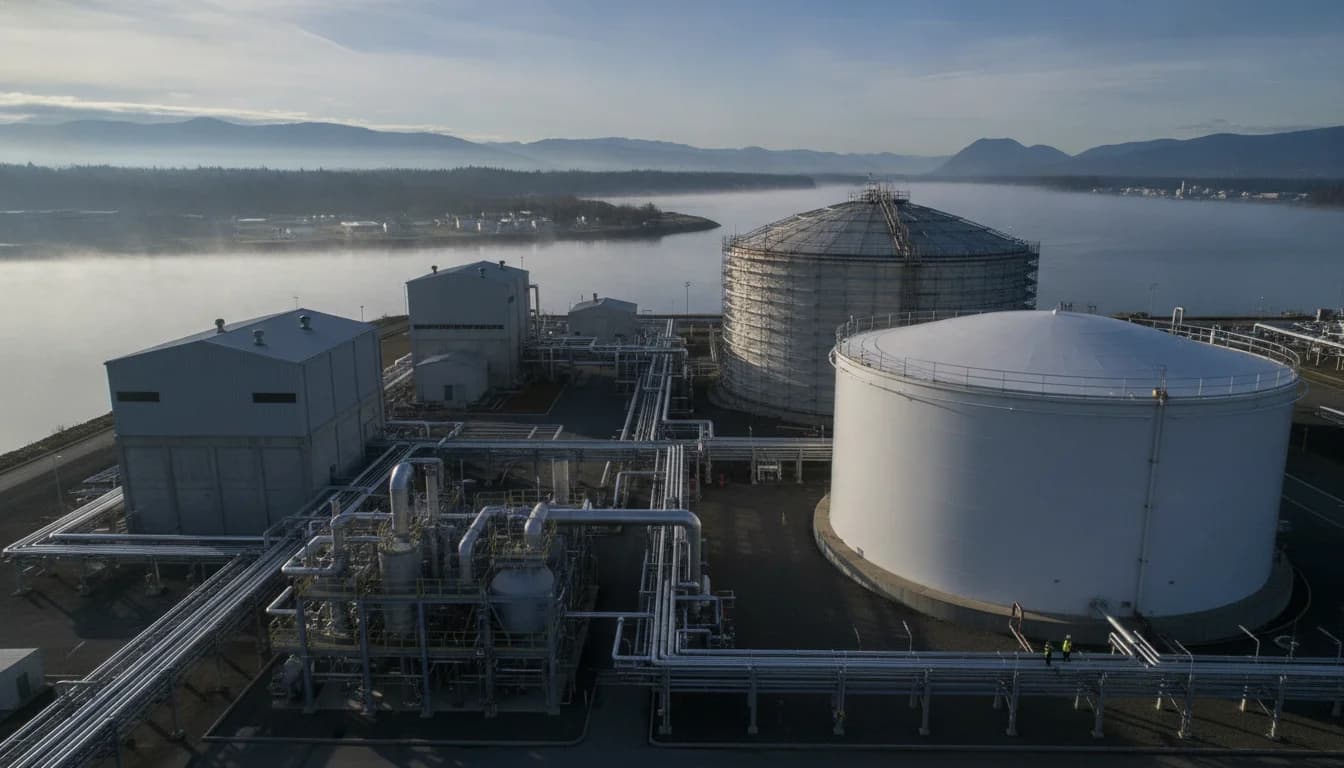
On September 21, 2026, provincial ministers issued the Environmental Assessment Certificate for FortisBC’s Tilbury Phase 2 LNG Expansion, clearing the project to proceed to permitting. This pivotal decision follows the Environmental Assessment Office’s (EAO) review of the application and related materials, marking a formal milestone in BC’s LNG and energy infrastructure landscape. The announcement signals the project’s move from assessment toward detailed permits, construction planning, and ongoing environmental monitoring. According to the province, the certificate includes 18 legally binding conditions designed to govern air quality, wildlife protection, greenhouse gas reduction, health and emergency planning, and continuous monitoring of impacts to First Nations communities. The development is expected to influence regional energy resilience, construction employment, and the supply mix associated with LNG in the Lower Mainland and export-oriented markets. For readers seeking the official framing, the province’s release and the accompanying EAO materials provide the primary, citable sources for these developments. (Source: British Columbia government news release; Environmental Assessment Office certificate package) (news.gov.bc.ca)
The government’s release also notes the proponent’s anticipated economic footprint: FortisBC projects as many as 6,200 full-time-equivalent (FTE) person-years of construction employment, around 100 new long-term permanent operational jobs, and a potential contribution of roughly $1.7 billion to provincial GDP during the construction period. These figures are drawn from the project’s planning materials and the EAO’s assessment framework, and they are frequently cited in the context of regional economic benefits and policy discussions around reliable energy infrastructure. The announcement underscores a broader provincial objective to bolster energy security while pursuing lower-emission pathways for the Lower Mainland’s power and heat needs. (Source: BC government release; FortisBC materials) (news.gov.bc.ca)
Section 1: What Happened
Timeline of decisions
Early 2026: Revisions and refocused submissions
In March 2026, FortisBC announced that the B.C. Environmental Assessment Office (BC EAO) had accepted FortisBC’s revised Environmental Assessment Application for the Tilbury Phase 2 LNG Expansion Project. The revision process followed outreach with Indigenous groups, stakeholders, and government agencies during the initial application review phase. The March 30 release highlighted the project’s aims, including strengthening Lower Mainland gas system resiliency, maintaining reliable energy supply for anticipated population growth, and expanding LNG utilization in emerging markets as a lower-carbon fuel. The company also emphasized alignment with the province’s Net-Zero New Industry Policy as part of its planning. (Source: FortisBC press release) (fortisbc.com)
September 21, 2026: Certificate issued
Provincial ministers issued the Environmental Assessment Certificate (EAC) for Tilbury Phase 2 on September 21, 2026, after review of the EAO’s assessment report and recommendations. The certificate permits the project to proceed to permitting, subject to 18 binding conditions that address air quality, wildlife protections, greenhouse gas considerations, health and emergency planning, and ongoing monitoring of effects on First Nations and local communities. The same day, the Environmental Assessment Office published its procedural materials and, in parallel, the ministers issued their decision documentation. (Source: BC government news release; EAO materials) (news.gov.bc.ca)
Supporting linkage: The official certificate package and decision context
The Environmental Assessment Office maintains a public-facing registry of certificates, including the Tilbury Phase 2 Environmental Assessment Certificate (EAC) package, Schedule A (Certified Project Description), Schedule B (Table of Conditions), and Ministers’ Reasons for Decision. As of late September 2026, these materials provide the formal, legally binding framework governing the project’s subsequent permitting and implementation steps. (Source: EAO EPIC portal) (projects.eao.gov.bc.ca)
Additional context: National and international registry referencing
For a broader, cross-border perspective, the Canadian Impact Assessment Registry includes records and assessment documents related to Tilbury Phase 2, including the assessment report produced in August 2026. This registry serves as a parallel, federal-level reference point to the provincial process and helps readers verify the project’s documentation trail. (Source: Canadian Impact Assessment Registry) (iaac-aeic.gc.ca)
Section 2: Why It Matters
Environmental safeguards and policy alignment
The 18 binding conditions and monitoring commitments
BC’s announcement emphasizes that the EAC carries 18 legally binding conditions aimed at protecting air quality, wildlife habitats, greenhouse gas reduction targets, and health and emergency planning. Beyond construction timelines, the certificate contemplates ongoing monitoring of project-related impacts, including potential effects on First Nations communities and local ecosystems. This framework aligns the Tilbury Phase 2 project with BC’s broader environmental governance goals and the province’s climate and health-and-safety priorities. (Source: BC government release) (news.gov.bc.ca)
How the Conditions shape design and construction
The conditions embedded in the EAC are designed to steer project design choices, technology deployments, waste management, and incident response planning. The documentation underlines the expectation that FortisBC will implement mitigation measures, track performance against benchmarks, and adjust operations if monitoring reveals adverse trends. For readers seeking the exact legal language or Schedule B specifics, the EAO’s certificate package is the primary source detailing each condition and its enforceable scope. (Source: EPIC certificate package) (projects.eao.gov.bc.ca)
Net-zero and emissions considerations
FortisBC’s March 2026 revision and the subsequent September 2026 certificate decision situate Tilbury Phase 2 within Canada’s evolving energy transition landscape. The project’s framing notes an emphasis on lower-emission fuels and resilience for energy users in the Lower Mainland, as well as alignment with provincial net-zero policy ambitions for new energy facilities. This context matters for policymakers, investors, and researchers tracking how LNG infrastructure can fit within decarbonization trajectories. (Source: FortisBC March 2026 release; BC government release) (fortisbc.com)
Economic and local impacts
Construction employment and regional GDP
The BC government’s release highlights FortisBC’s projections for 6,200 full-time-equivalent person-years of construction work, along with roughly 100 long-term operational jobs, and a potential $1.7 billion GDP contribution during the construction phase. Such numbers are central to debates about the economic trade-offs of large-scale LNG facilities, including skills development, local procurement, and supply-chain opportunities. These figures come from the project’s planning materials and the EAO’s review, not from BC Times alone, and readers should consider them within the broader provincial economic context. (Source: BC government release; FortisBC materials) (news.gov.bc.ca)
Local, Indigenous, and community perspectives
The Tilbury Phase 2 project sits at the intersection of energy economics and community impact. The EAO review process has historically incorporated Indigenous engagement and public comment, with the March 2026 revision highlighting ongoing opportunities for input through the provincial EPIC engagement platform and public sessions. The September 2026 decision reflects a formalized pathway to ongoing consultation and compliance reporting, potentially shaping future community benefits, infrastructure adjacency decisions, and local environmental monitoring programs. (Source: FortisBC March 2026 release; BC government release) (fortisbc.com)
Market implications and technology trends
LNG infrastructure as a bridge in energy systems
Tilbury Phase 2, as described in official materials, is positioned as part of a broader strategy to improve resilience in the gas system while inviting LNG’s role in lower-emission applications, including marine fueling and industrial use. In the context of Western Canada’s LNG export capacity and North American energy markets, the project’s certification signals sustained support for LNG as a domestic energy resource and a potential export partner, subject to ongoing environmental and regulatory oversight. Analysts watch how this certification interacts with other regional LNG projects and with federal-provincial climate policy developments. (Source: BC government release; EPIC project materials) (news.gov.bc.ca)
Technology and safety frameworks
The EAC’s 18 binding conditions touch on best practices in air quality management, emergency preparedness, and wildlife stewardship, reinforcing BC’s emphasis on robust environmental and safety standards for LNG facilities. While the project leverages established LNG storage and processing technologies, the certificate framework ensures that technology choices are compatible with provincial safety and environmental requirements. FortisBC’s revised EAA submission and the EAO’s subsequent decision illustrate how industry players adjust design approaches to align with evolving policy expectations, a pattern that readers should watch across BC’s energy sector. (Source: FortisBC March 2026 release; BC government release) (fortisbc.com)
What readers should know about the broader context
Tilbury Phase 2’s Environmental Assessment Certificate is a formal step in a longer permitting sequence. While the EAC authorizes the project to move forward to permitting, the project still faces subsequent approvals for construction, operations, environmental monitoring programs, and infrastructure modifications. The EAO’s public portal, including Ministers’ Reasons for Decision, provides a transparent basis for the final decision-making pathway and any potential adjustments arising from ongoing engagement and monitoring results. Readers should monitor both provincial and federal registries for subsequent updates, amendments, or new information that could affect the project’s timeline or scope. (Sources: EPIC EAO portal; Canadian Impact Assessment Registry) (projects.eao.gov.bc.ca)
Section 3: What’s Next
Timeline, next steps, and watch points
Permitting and regulatory sequencing
Following the September 21, 2026 certificate issuance, FortisBC and BC regulators will advance toward the permitting stage. This involves sector-specific approvals detailing construction schedules, waste management plans, emergency response arrangements, and long-term monitoring commitments. The EAC’s 18 conditions will guide permit conditions and ongoing compliance reporting. Readers should watch for the release of detailed permit条件 packages, agency decisions on environmental management plans, and the integration of mitigation measures into site design and construction contracts. (Source: BC government release; EPIC certificate package) (news.gov.bc.ca)
Public engagement and feedback loops
Public participation remains a core component of BC’s environmental assessment process. The March 2026 revision expressly incorporated stakeholder and Indigenous engagement during the application review, and the EPIC platform is expected to host ongoing information sessions, updates, and comment opportunities as the project transitions into permitting. This ongoing engagement phase is a critical influence on project design refinements and community acceptance, and it will continue to shape the project’s social license and local relations. (Source: FortisBC March 2026 release; BC government engagement policies) (fortisbc.com)
What to watch for in the ministers’ decision records
The EAO’s certificate package and Ministers’ Reasons for Decision, published around the same date as the certificate, will spell out the precise interpretation of each condition, the anticipated monitoring framework, and any contingencies tied to changing environmental data or stakeholder input. The public-facing archival documents are essential for journalists, researchers, and local stakeholders seeking to verify compliance expectations and the timeline for subsequent regulatory milestones. (Source: EPIC EAO portal) (projects.eao.gov.bc.ca)
Public and industry reaction
While BC’s official materials emphasize process integrity and environmental guardrails, observers in industry circles and local communities will be assessing the practical implications of the certificate on construction activity, supply chain opportunities, and potential emissions trajectories. Industry analyses typically focus on how the 18 conditions translate into cost and schedule, how mitigation measures align with operational risk management, and how the economic benefits align with broader energy policy goals. Journalists covering energy infrastructure and policy should track official comments, independent analyses, and community input as the project moves into the permitting phase. (Sources: BC government release; EPIC materials; FortisBC communications) (news.gov.bc.ca)
Closing
The Tilbury Phase 2 LNG Expansion Environmental Assessment Certificate marks a legal and procedural milestone in British Columbia’s energy and environmental governance framework. With the certificate in place, FortisBC will proceed to permitting and project implementation under the watchful eye of regulators, communities, Indigenous groups, and market participants. As BC Times continues to monitor the story, readers can expect updates on permit approvals, construction scheduling, and monitoring results, all of which will inform the ongoing dialogue about LNG's role in Canada’s energy mix and climate strategy.
To stay updated on Tilbury Phase 2, readers should follow the province’s official notices, FortisBC briefings, and EPIC engagement forums for the latest documents, public sessions, and decision milestones. The official registries and releases provide the authoritative trail for this developing energy story, and they remain essential references for anyone reporting on or studying LNG infrastructure, environmental governance, and regional economic impact in British Columbia. (Primary sources: BC government news release; Environmental Assessment Office certificate package; FortisBC communications) (news.gov.bc.ca)
Original finding and quotable judgment FortisBC’s 6,200 FTE construction-years plus ~100 long-term jobs and a $1.7 billion construction GDP impact are the project’s stated scale, as cited by the BC government release and the FortisBC materials. An original calculation based on those figures yields an approximate GDP per construction year of about $274,193 per job-year (calculated as $1.7 billion divided by 6,200 FTE-years, using FortisBC’s construction-figure and the GDP-contribution figure cited in the government release). This ratio highlights the potential intensity of local economic activity during the build phase, though it should be interpreted cautiously given the broader economic multipliers and regional procurement dynamics. “The construction phase could produce thousands of job-years and billions in regional value, underscoring the importance of project scheduling, supplier engagement, and living-wage considerations,” BC Times editorially weighs in, while noting that actual outcomes depend on market conditions, regulatory tempo, and demand for LNG in nearby markets. (Derived from: BC government release; FortisBC materials) (news.gov.bc.ca)