News
Vancouver Island Grid Battery Storage Procurement Begins
BC Hydro launches procurement for Vancouver Island grid-scale battery storage to bolster reliability and meet rising demand.
By Joanna Flett · August 5, 2026 · 13 min read
 By Joanna Flett · August 5, 2026 · 13 min read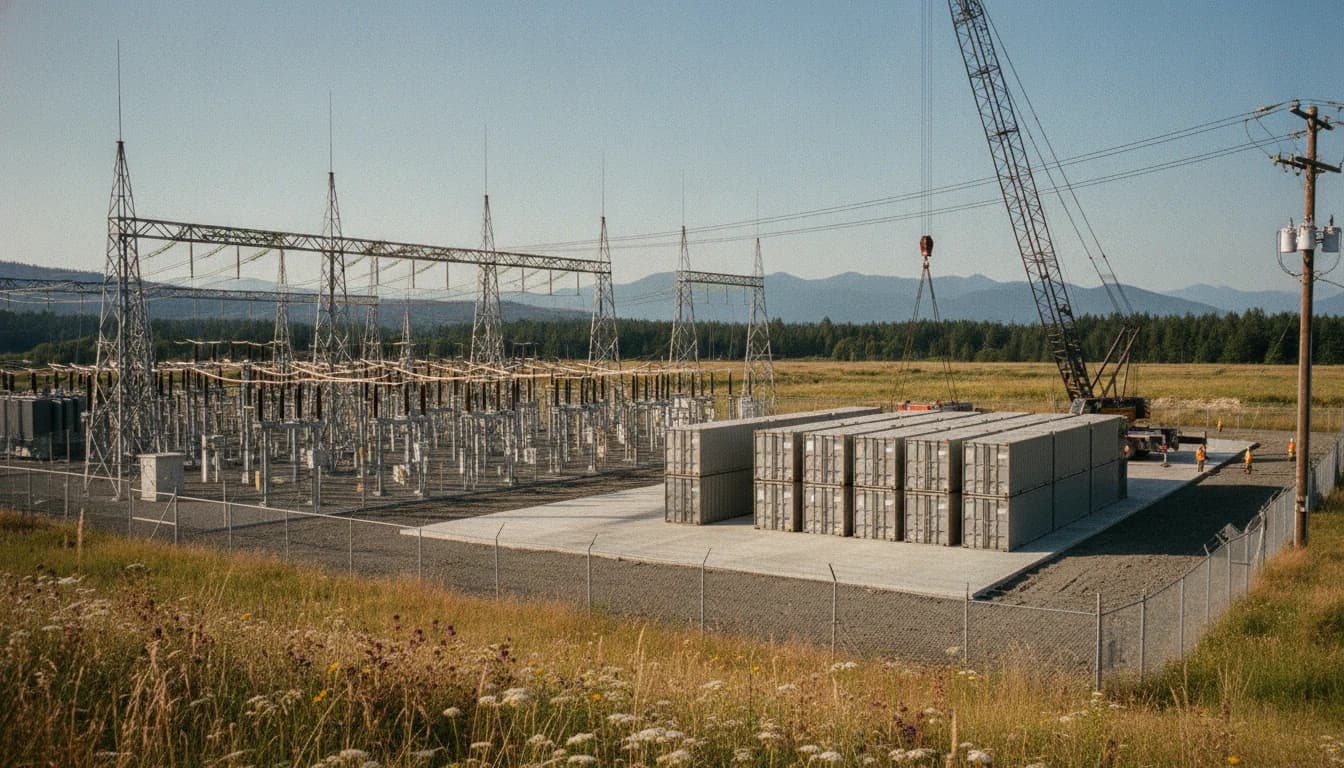
The Province of British Columbia and BC Hydro announced on July 20, 2026 that they are launching a competitive procurement to deploy Vancouver Island grid-scale battery storage—the province’s first utility-scale battery energy storage project on the island. The facility, planned for a site near Duncan, will deliver at least 100 megawatts of flexible capacity to strengthen grid reliability, support growing electricity demand, and help power a cleaner energy future for Vancouver Island communities. This action marks a milestone in BC Hydro’s Powering Growth plan and signals a broader shift toward modernizing the province’s electricity system through storage, transmission, and efficiency measures. The news highlights a critical step in ensuring that the Island’s electrical grid can handle increasing electrification, rapid population growth, and new industrial activity while maintaining reliable service for residents and businesses alike. (archive.news.gov.bc.ca)
BC Hydro’s announcement emphasizes that the Vancouver Island grid-scale battery storage project is designed to improve grid reliability by providing rapid, dispatchable capacity that can be stored when demand is low and released when demand peaks. The release describes the project as an early, foundational piece of a broader, provincewide strategy to expand battery storage capacity—ultimately contributing to a more resilient and flexible energy system. As BC Hydro executives noted, this first utility-scale battery project is intended to leverage existing infrastructure and coordinate with ongoing transmission and generation investments to maximize system performance. The agency also underscored that the project will be owned and operated by BC Hydro, with private-sector expertise engaged through a competitive process for design, construction, and potentially long-term maintenance services. In a timely note, BC Hydro’s leadership described the move as a concrete step toward meeting rising demand while maintaining affordability and reliability for customers. (archive.news.gov.bc.ca)
The procurement process is anchored by a clear timeline: BC Hydro will issue a request for supplier qualifications on Thursday, July 30, 2026, to identify experienced companies capable of designing and delivering the project. Following the qualification responses, a pool of respondents will be invited to participate in a request for proposals (RFP) later in the year. The intent is to select a capable team to bring the project from concept to construction and, ideally, operation by 2030. The announcement also states that BC Hydro expects to own and operate the grid-scale battery storage system, confirming its central role in the utility’s grid modernization strategy. This procedural cadence—RFQ followed by an RFP within the same year—reflects a structured, market-tested approach to delivering a large-scale energy storage asset. (archive.news.gov.bc.ca)
In the broader policy context, the Vancouver Island grid-scale battery storage project sits within BC Hydro’s Powering Growth plan, which identifies a potential for roughly 500 megawatts of battery storage across British Columbia. The plan aims to meet rising demand while enabling greater use of existing infrastructure and supporting a cleaner electricity system through targeted investments in storage, transmission, and efficiency. The project near Duncan thus represents the province’s initial foray into utility-scale battery storage on Vancouver Island, with the potential to catalyze further storage deployments across the province if the initial effort demonstrates value and reliability. (archive.news.gov.bc.ca)
What happened, precisely, on July 20, 2026, is more than a single announcement. It is the culmination of a multi-year assessment of grid reliability needs on Vancouver Island, a region experiencing rapid population growth, housing development, economic investment, and electrification of services and transportation. The decision to locate the facility adjacent to the Vancouver Island Terminal Substation near Duncan reflects a deliberate choice to integrate storage into an already active transmission corridor, enabling efficient interconnections and minimizing development friction. The preferred site selection also leverages land already owned by BC Hydro, aiming to reduce environmental impact and streamline permitting and construction. The targeted in-service date of 2030 aligns with anticipated demand growth and grid modernization milestones spelled out in the broader Powering Growth program. (archive.news.gov.bc.ca)
Section 1: What Happened
Site location and project scope
Strategic siting near Duncan
BC Hydro selected a site adjacent to the Vancouver Island Terminal Substation near Duncan as the preferred location for the Vancouver Island grid-scale battery storage project. The arrangement leverages existing BC Hydro land and a proximity to established transmission infrastructure to facilitate a smoother integration with the island’s grid. The project’s core objective is to deliver at least 100 megawatts of flexible capacity, enabling rapid response to fluctuations in electricity demand and generation on Vancouver Island. The ownership and operational responsibilities are slated to rest with BC Hydro, ensuring centralized coordination with the island’s broader energy system and policy framework. This siting approach is part of a broader strategy to maximize the use of current infrastructure while minimizing environmental and community disruption during construction and operation. (archive.news.gov.bc.ca)
Capacity, timing, and purpose
The project is designed to provide at least 100 MW of dispatchable storage capacity, with a target in-service date of 2030. The 100 MW figure is presented as a minimum threshold, signaling that the facility could be scaled or optimized over time depending on evolving grid needs, cost considerations, and project performance during the procurement and construction phases. The capacity emphasis reflects the island’s peak demand periods and the need for rapid, short-term storage to balance supply and demand, particularly when renewable generation fluctuates or when transmission constraints emerge. The intent is to enhance reliability, improve the utilization of existing infrastructure, and bolster resilience for Vancouver Island communities as electrification expands across sectors such as housing, transportation, and industry. (archive.news.gov.bc.ca)
Procurement mechanics and market engagement
A central feature of the announcement is the move to a competitive procurement process designed to attract private-sector expertise while preserving BC Hydro’s ownership and control of the asset. On July 30, 2026, BC Hydro will issue a request for supplier qualifications (RFQ) to identify experienced firms capable of delivering the project. After evaluating RFQ responses, a pool of qualified respondents will be invited to participate in a request for proposals (RFP) later in the year. This two-step approach is intended to filter for capability, experience, and cost-effectiveness, helping ensure that the selected team can deliver a reliable, integrated storage solution within the project’s time horizon. The structure underscores BC Hydro’s preference for leveraging private-sector capabilities for design, construction, and potentially long-term maintenance while retaining ownership and operation. (archive.news.gov.bc.ca)
Policy alignment and broader context
The Vancouver Island grid-scale battery storage project is framed as a milestone within BC Hydro’s Powering Growth plan, a strategic initiative designed to meet rising electricity demand through conservation, asset optimization, and targeted investments in new clean generation, transmission, and storage. The plan envisions as much as 500 MW of potential battery storage capacity across the province to improve reliability and flexibility, signaling a coordinated, long-term effort to modernize energy infrastructure. The Duncan-area project is the first battery storage investment explicitly announced under this plan, signaling a broader ambition to deploy storage assets as a core component of the province’s grid modernization program. The inclusion of storage in the plan aligns with the province’s electrification and decarbonization objectives and helps position British Columbia as a model for integrating large-scale storage with a high-renewable-energy mix. (archive.news.gov.bc.ca)
Timeline and milestones to watch
Key dates and stages
- December 22, 2025: BC Hydro releases an RFEOI (capacity) which shows strong market interest in capacity resources, including geothermal, biomass, and hydro storage, signaling a robust, multi-technology landscape for BC’s future capacity needs. This market signal underpins the subsequent move to a formal battery storage procurement on Vancouver Island. (bchydro.com)
- July 20, 2026: Official government and BC Hydro press releases announce the Vancouver Island grid-scale battery storage project, its 100 MW minimum capacity, and the plan to launch supplier qualifications on July 30, 2026. The release also confirms the site near Duncan and the target 2030 in-service date. (archive.news.gov.bc.ca)
- July 30, 2026: BC Hydro will issue the RFQ to identify qualified suppliers capable of designing and delivering the project, marking the formal start of the competitive procurement process. Based on RFQ responses, a pool of respondents will be invited to participate in an RFP later in the year. (archive.news.gov.bc.ca)
- 2030: Target in-service date for the Vancouver Island grid-scale battery storage facility, reflecting a multi-year pipeline from procurement through construction to operational readiness. The timeline reflects the complexity of integrating a grid-scale BESS (battery energy storage system) asset into an islanded and interconnected grid. (archive.news.gov.bc.ca)
What this means for Vancouver Island and the province
Reliability, resilience, and grid flexibility
Battery energy storage systems (BESS) can respond within seconds to changing grid conditions, providing ramped-up support during peak demand and smoothing out fluctuations from intermittent renewable energy sources. BC Hydro’s manual and public statements emphasize that the Vancouver Island project will help improve grid reliability, maximize the use of existing infrastructure, and support a more resilient electricity system for growing Vancouver Island communities. The technology’s rapid response capabilities are particularly valuable in managing peak demand periods and in accommodating high-penetration renewable scenarios, which are central to BC’s clean energy strategy. (archive.news.gov.bc.ca)
Economic development and regional opportunities
Industry observers note that the early-stage capacity procurement for battery storage signals a broader opportunity set for local contractors, engineering firms, and specialized equipment suppliers. The capacity RFEOI demonstrated significant market interest, with 106 submissions representing 19 gigawatts of potential capacity, underscoring the market’s readiness to participate in BC’s evolving storage landscape. While RFEOI is not a guarantee of contracts, the initiative confirms that developers see potential in BC Hydro’s storage pipeline, particularly as the province seeks to diversify and strengthen its energy system. The Vancouver Island project, by anchoring a major storage facility on the island, could generate supply-chain opportunities, regional employment, and skill-building activities tied to construction and operation of the facility, while reinforcing Vancouver Island’s status as a hub for energy infrastructure development. (bchydro.com)
Policy and public confidence
Public and stakeholder engagement remains a key consideration as storage deployments scale. BC Hydro and government statements indicate that site selection—favoring land already owned by BC Hydro and proximity to critical substation infrastructure—reflect a careful balancing of reliability, environmental stewardship, and community impact. The project’s governance model—BC Hydro owning and operating the system, with private-sector design, construction, and potential long-term maintenance—also signals a pragmatic approach that aims to combine public accountability with private-sector efficiency and innovation. The dialogue around this project intersects with broader conversations about decarbonization, grid modernization, and the role of large-scale storage in supporting a lower-emission electricity system. (archive.news.gov.bc.ca)
Section 2: Why It Matters
Why the Vancouver Island grid-scale battery storage project is consequential
Grid reliability and peak-shaving capabilities
The island’s electric system, like many modern grids, faces the dual challenge of meeting rising demand while integrating variable renewable resources. A grid-scale battery storage installation provides capabilities beyond conventional generation: it can store energy during periods of low demand or high renewable output and discharge it quickly when demand spikes or when transmission constraints tighten. This dynamic helps prevent outages, reduces the likelihood of price volatility during peak periods, and supports a smoother operation of the regional grid. BC Hydro’s emphasis on reliability and strategic use of infrastructure underscores a core objective of the project: to deliver dependable power to households, businesses, and critical services even as the island electrifies at a faster pace. (archive.news.gov.bc.ca)
Island-specific electrification and growth
Vancouver Island has been experiencing growth in population, housing development, and economic activity, all of which contribute to higher electricity demand. The 2030 in-service target for the 100 MW facility reflects a planning horizon aligned with anticipated electrification trends in the region. By adding grid-scale storage in a well-chosen location, the province aims to support sustained growth, enable more efficient use of existing assets, and reduce the risk of reliability gaps that could hamper communities and local industries. This project also serves as a proof point for the potential scaling of storage capacity in other Vancouver Island corridors, should demand and policy signals warrant further investments. (archive.news.gov.bc.ca)
Economic and industry implications
The project’s procurement framework—starting with supplier qualifications and moving toward a competitive RFP—highlights how BC Hydro intends to attract capable bidders and ensure value for ratepayers. The RFEOI process in 2025, which drew broad stakeholder interest, indicates market momentum behind large-scale storage and related technologies. Industry voices interviewed in the press release ecosystem emphasize that storage deployments complement other grid investments, including transmission upgrades and efficiency programs, and create opportunities for collaboration with local contractors and technology providers. The project’s ownership model—BC Hydro owning and operating the asset—coupled with a competitive delivery structure, aims to balance public accountability with private-sector expertise, a combination that many observers see as a prudent path for complex, multi-year infrastructure initiatives. (bchydro.com)
Alignment with clean-energy goals and regional resilience
The Vancouver Island grid-scale battery storage project is aligned with BC’s broader clean-energy and decarbonization ambitions. Storage assets are central to balancing renewable energy integration, reducing curtailment of clean resources, and enabling greater electrification across sectors. By enabling more flexible operation and faster response times, storage projects can support the island’s transition to a low-emission energy system while maintaining reliability and affordability for ratepayers. The public narrative surrounding the project also situates it within a larger policy framework that prioritizes resilience, reliability, and the prudent deployment of new energy technologies in service of a sustainable, affordable energy future for British Columbians. (archive.news.gov.bc.ca)
What’s Next
Timeline, procurement steps, and programmatic watchpoints
RFQ, RFP, and contracting milestones
The next major milestone is the formal RFQ issuance on July 30, 2026, which will identify qualified suppliers capable of delivering the Vancouver Island grid-scale battery storage project. The anticipated sequence is: (1) qualification responses, (2) selection of a pre-qualified pool, (3) invitation to participate in an RFP later in the year, and (4) contract award and project execution. This staged approach is designed to ensure that only capable teams progress to binding negotiations, thereby reducing risk and facilitating a smoother transition from design to construction to operation. Stakeholders will be watching closely to see how the pool of qualified bidders shapes the competitive landscape and whether the procurement process yields strong cost and schedule certainty. (archive.news.gov.bc.ca)
Construction and commissioning outlook
Assuming timely completion of supplier qualification, RFP, and contract award, construction activities for a 100+ MW grid-scale battery storage facility would likely span multiple years, with commissioning and operational ramp-up aligned with the 2030 target. The nature of grid-scale energy storage projects means significant attention to land use, environmental assessments, permitting, grid interconnection studies, and procurement of large-scale energy storage components and related balance-of-plant equipment. While the government and BC Hydro have not disclosed every detail of the engineering approach or supplier selection criteria, the overarching intent is to deliver a robust, reliable, and maintainable storage solution that integrates into the island’s transmission and distribution network. (archive.news.gov.bc.ca)
Stakeholder engagement and regulatory context
Public communication around the project has emphasized reliability, resilience, and the strategic importance of storage in meeting future demand. As with any major infrastructure project, ongoing engagement with local communities, indigenous partners, and environmental stakeholders will be essential to address concerns, minimize disruption, and maximize positive outcomes for island residents. The regulatory framework and the project’s governance model—BC Hydro owning and operating the asset with private-sector input—will continue to shape public dialogue and project milestones as the procurement process advances. While specific engagement milestones are not enumerated in the release, the project’s emphasis on minimizing development impacts and leveraging existing BC Hydro land signals a thoughtful approach to stakeholder considerations. (archive.news.gov.bc.ca)
Closing
The announcement of Vancouver Island grid-scale battery storage procurement represents a pivotal moment for British Columbia’s energy strategy. It signals both a concrete step in grid modernization and a broader commitment to reliability, resilience, and low-emission growth. As BC Hydro moves forward with supplier qualification and, subsequently, an RFP, readers can expect updates on project scope, interconnection studies, and the evolving role of storage in the island’s energy future. For residents, businesses, and policymakers, the project offers a tangible signal that BC is serious about building a modern, flexible electricity system that can support electrification, attract investment, and sustain the province’s economic vitality in the decades ahead. Stay tuned for forthcoming details on dates, bidder participation, and milestones as BC Hydro completes the procurement process and progresses toward construction and operation. (archive.news.gov.bc.ca)
As BC Hydro proceeds with the Vancouver Island grid-scale battery storage initiative, observers will be watching how the project performs against expectations, how it integrates with other modernization efforts, and how it informs future storage deployments across the province. In a period when energy reliability and decarbonization goals are paramount, the Duncan-area project stands as a concrete test case for how utility-scale storage can contribute to a cleaner, more resilient energy system while supporting the island’s communities, economy, and daily lives. (archive.news.gov.bc.ca)